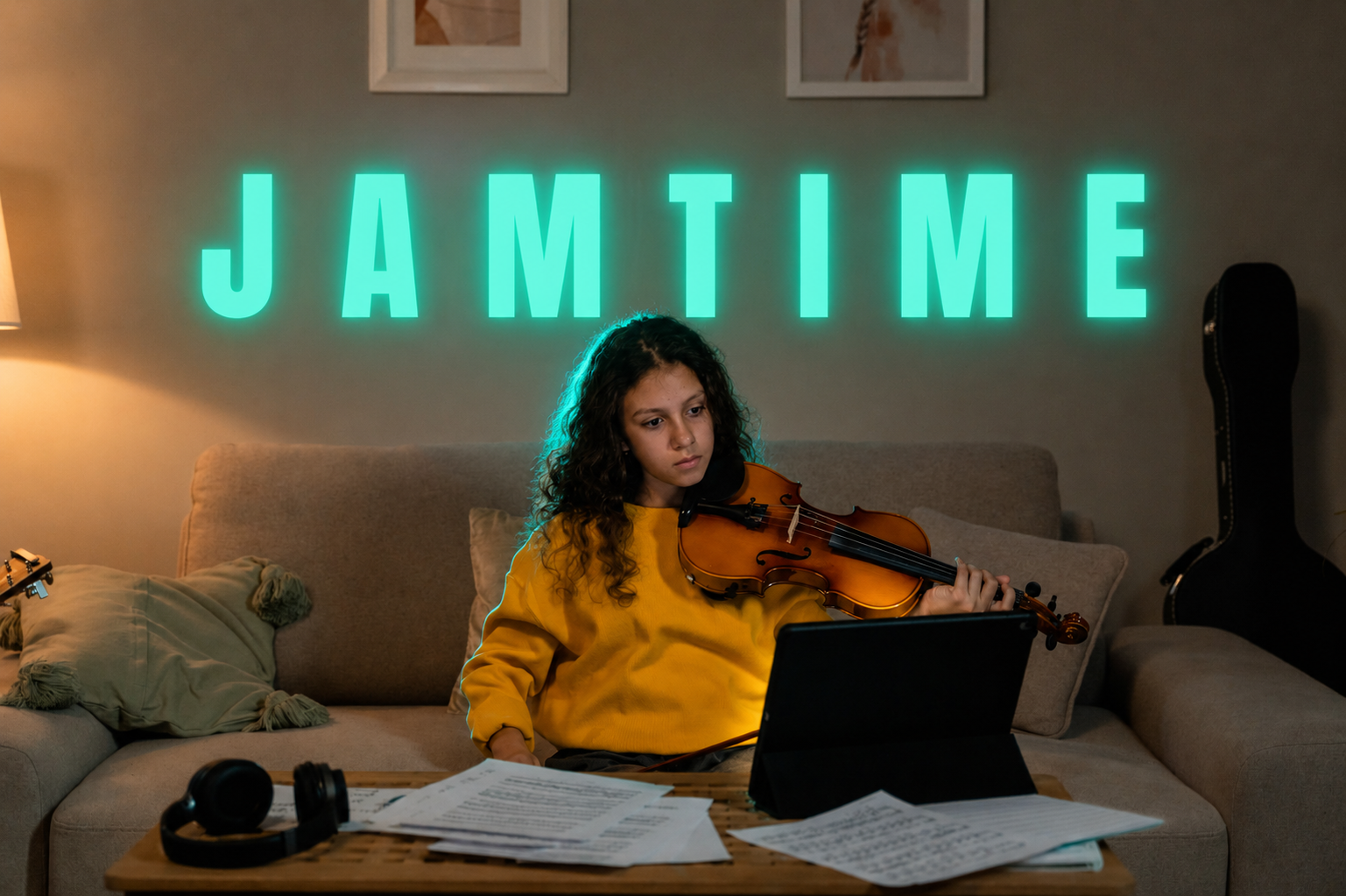
Best Music Practice Apps for Kids in 2026 — And How to Choose the Right One
Not all music apps are created equal. Here's what actually helps students improve — and what to look for before you download.
Most parents have been there. Your child has a music lesson on Thursday. By Tuesday night, you're not entirely sure they've practised once since last week. You download an app — something colourful, something that promises to make practice fun — and for three days it works. Then it doesn't.
The problem usually isn't the child. It's that most music apps are built for entertainment, not for the kind of deliberate, teacher-guided practice that actually leads to improvement.
Here's a look at the most popular music practice apps for kids in 2026, what each one does well, and what to consider before choosing one for your child.
What Makes a Music Practice App Actually Useful
Before diving into specific apps, it's worth being clear about what good practice support looks like.
The most effective music practice apps share three qualities. They make practice a daily habit rather than a weekly event. They keep the teacher involved in what happens at home. And they make progress visible — to the student, the parent, and the teacher.
Apps that tick all three of these boxes are rare. Most focus on just one.
The Apps Worth Knowing About
Yousician
Yousician is one of the most well-known music learning apps for kids. It teaches guitar, piano, ukulele and other instruments through step-by-step lessons, listening to the student play and providing real-time feedback. The gamified approach works well for keeping younger students engaged.
Where it falls short: Yousician works best as a self-directed learning tool. It doesn't connect to a private teacher's curriculum, which means students are essentially following Yousician's program rather than their teacher's. For kids in private lessons, this can sometimes create confusion about what they should actually be practicing.
Best for: Teenagers without a music teacher who just want to have fun with self-directed learning. The downside is bad technique won’t necessarily be picked up and could be a problem if they begin taking their instrument seriously.
Modacity
Modacity is a structured practice planner designed for more serious students. It allows users to log what they practised, set goals, and track progress over time. The focus on deliberate practice makes it a step above most apps in terms of actual skill development.
Where it falls short: Modacity is primarily a solo tool. There's no built-in communication between students, teachers, and parents, which means the teacher is still largely in the dark about what's happening between lessons.
Best for: Older, self-motivated students who want to take ownership of their practice routine.
Simply Piano
Simply Piano focuses specifically on piano learners and uses the phone's microphone to listen and respond to what students play. It's visually appealing and works well for adult beginners.
Where it falls short: Like Yousician, it follows its own curriculum rather than a teacher's. Best for: adult or late teen Piano beginners who want an engaging, independent learning experience. However, it is more like rote learning and doesn’t necessarily result in students learning how to read music, or anything about music theory, history or technique. Very easy to form bad habits.
The Gap Most Apps Leave Open
Here's what the apps above have in common: They all work well in isolation.
What none of them solve is the communication problem between lessons and developing a daily practice habit that focuses on work set by the teacher. A student can log 10 Modacity sessions, complete three Yousician levels, and their teacher will still have no idea what happened at home.
When students ignore practice instructions set by teachers and they just do their own thing based on what an app told them, it’s like starting from scratch every lesson. Progress slows. Frustration builds on both sides. Students drop out. Parents are paying for more lessons than it should take to reach goals

How JamTime Approaches This Differently
JamTime was built specifically around this gap.
Rather than replacing the teacher's curriculum with its own program, JamTime connects teachers, students, and parents in one place — so the work that happens in the lesson room carries through to the week at home.
Teachers write practice instructions directly into the app during each lesson. Students see exactly what to work on. Parents can see the notes too, which means they can support practice without needing to interpret a paper notebook — or nag.
Practice reminders go out automatically, building the daily habit without anyone having to remember to send them. And because teachers can be sure the right things have been practiced, and see that students have been practicing when they log their practice streaks, the next lesson can pick up where home practice left off.
It's a different approach to the same problem — and for families in private music lessons, it's worth understanding the distinction.

How to Choose the Right App for Your Child
A few questions worth asking before you download anything:
Is your child in private lessons?
If yes, the most important feature is teacher connectivity. An app that connects teachers, students and parent will almost always produce better results than one that doesn't.
How old is your child?
Younger students tend to need more external structure — reminders, parent visibility, teacher guidance. Older students can benefit from more independence and self-tracking tools.
What's the goal?
If the goal is to supplement formal lessons and build a consistent daily practice habit, choose an app designed around that. If the goal is purely exploration and fun, entertainment-focused apps have their place.
The Bottom Line
The best music practice app for your child is the one that actually gets used — and one that keeps their teacher in the loop.
For families in private music lessons, JamTime is worth trying. It's free to download, takes minutes to set up, and is built around the relationship between teacher, student, and parent rather than around its own curriculum.
Download JamTime on the App Store
Visit jamtime.com.au to learn more.
JamTime — practice made simple, progress made real.